
The Garden’s Seasonal Decline
The Character of RainThis flow traces the garden from a divine childhood sanctuary into an early sign that growth turns toward decay.
increasing Bearing strength in each event
 decreasing
Bearing strength in each eventdecreasingSpring’s First Abundance
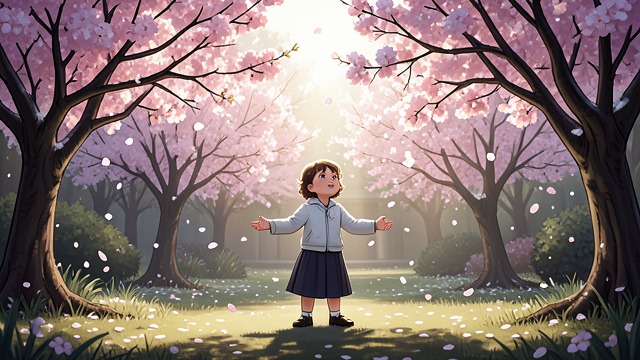
Spring’s First Abundance
A world renewing itself
The garden’s plum trees bloom, and plants seem to grow more luxuriantly each day. The Narrator (God) experiences each new blossom as a fresh offering.
A paradise assembled
The child treats the garden as a sanctuary where humanity and the universe meet. Its beauty supports the belief that the world is responding to the child’s presence.
The Peony Command
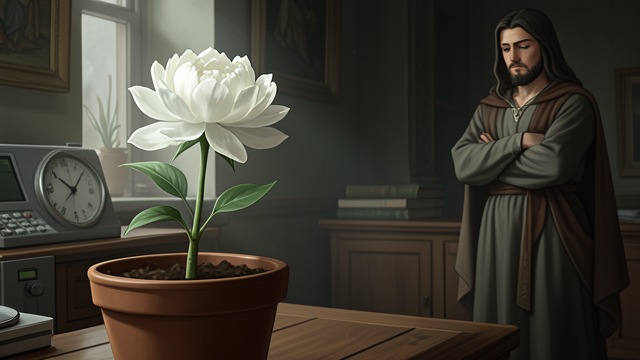
The Peony Command
Speech appears powerful
The Narrator (God) tells a budding stem to blossom and sees a white peony the following day. The child regards the coincidence as evidence of command over nature.
Faith reinforced
Nishio-san does not challenge the child’s belief. The garden becomes both a beautiful landscape and a setting for the Narrator (God)'s emerging self-deification.
May’s Fading Flowers
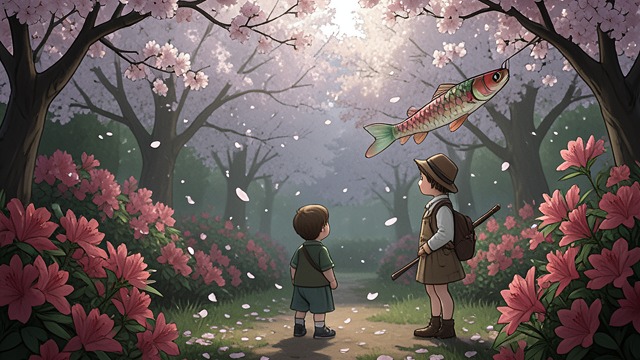
May’s Fading Flowers
Beauty begins to recede
The cherry blossoms fall as the azaleas bloom, and the child senses that spring is changing. The carp streamer’s month of boys arrives amid this shift in the landscape.
A first suspicion
The Narrator (God) begins to associate May with decline rather than uncomplicated promise. Seasonal change makes the garden’s abundance feel less secure.
Rain Transforms the Landscape
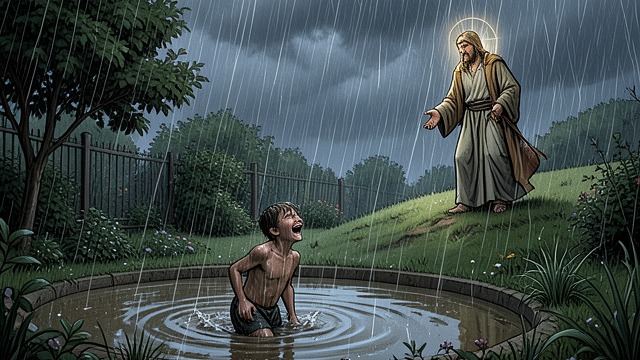
Rain Transforms the Landscape
Water reshapes familiar ground
Repeated rain floods neighborhood streets and enlarges Little Green Lake. The landscape becomes a changing environment that the child experiences through immersion.
Nature exceeds control
The Narrator (God) delights in storms but cannot direct where the water goes. The garden and its surroundings are beautiful partly because they remain larger than the child’s imagined authority.
The Overripe Garden
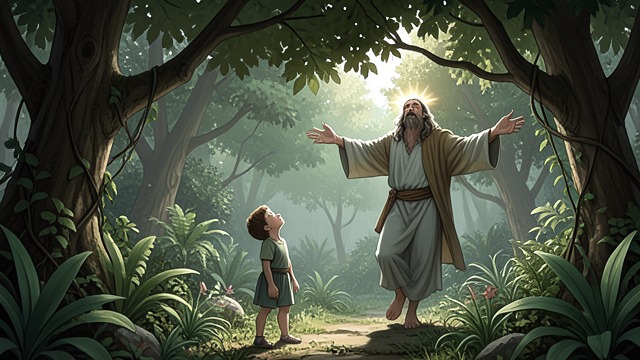
The Overripe Garden
Abundance turns heavy
The trees and flowers remain lush, but the Narrator (God) finds them overgrown and hungover. The child senses that the garden has passed an invisible turning point.
Growth conceals decline
The narrator later interprets the moment through a principle that what does not advance retreats. The sanctuary’s beauty cannot hold its spring state forever.
February and early spring 1970
Spring 1970
May 1970
July, during Japan's rainy season
Mid to late August 1970
